


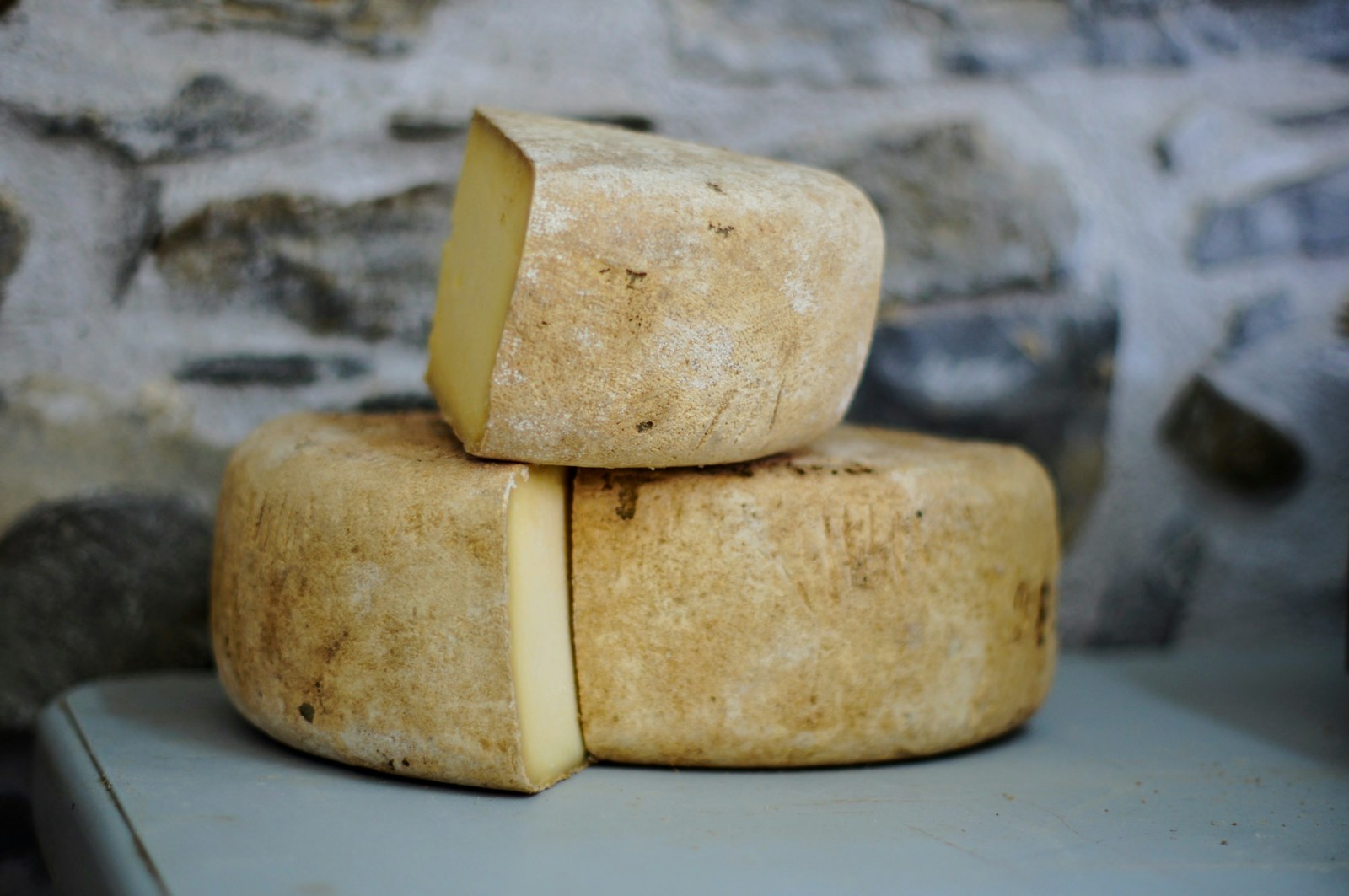
Cheese production presents unique labeling challenges compared to other food categories. Weight variation between units of the same product is inherent — two wheels of the same Brie recipe will never weigh exactly the same. Every unit must be individually weighed, priced, and labeled. Add the complexity of maturation lot tracking, multi-language export labels, and strict EU dairy labeling requirements, and you have a labeling operation that demands an integrated, automated system. Rosistem Scale Print was built for exactly this environment.
Cheese-Specific Labeling Challenges
- Variable weight products — no two units weigh the same; price must be calculated per-unit from price-per-kg
- Maturation lot tracking — same recipe, different aging periods, different lots — all must be traceable separately
- Multi-language export labels — Romanian cheese exported to EU requires labels in the destination country's language
- Nutritional data per variety — fat content, protein, and nutritional values differ by recipe and maturation
- Cheese rind and net weight — some varieties require net weight after rind tare deduction
- Cold chain compliance — storage temperature must appear on labels for certain categories
Scale Print Configuration for Cheese
Variable Weight Pricing
Scale Print receives the tared weight directly from the scale, applies the price-per-kg for that product variety, and prints the calculated price on the label — including a GS1-128 barcode that encodes weight and price for retail scanner compatibility. This is the same workflow used by supermarket deli counters, now applied to your production line.
Maturation Lot Management
Each batch entering the maturation cellar receives a lot number from Scale Print. As wheels are moved through aging stages (7 days, 21 days, 60 days, etc.), the system tracks which lot is in which stage. At packaging, the correct maturation lot number appears on the label automatically — along with production date, best-before calculated from maturation completion date, and aging duration if required by the product specification.
Multi-Language Label Templates
Scale Print maintains separate label templates for each export destination. An operator selects "Export DE" or "Export FR" and the system generates the label with translated product name, ingredient list, allergen statements, and regulatory information in the correct language. No bilingual label gymnastics — clean, destination-specific labels every time.
✅ Implementation example
A Romanian artisan cheese producer with 18 product varieties, exporting to Germany and France. Scale Print implementation took 3 weeks. Result: label generation time from 45 seconds/unit to under 2 seconds, maturation lot errors reduced to zero, first EU export audit passed with no labeling findings.
Integration with Dairy ERP Systems
Scale Print integrates with ERP systems used in Romanian dairy operations:
- SAP S/4HANA — production orders, GS1 compliance, quality management
- Microsoft Dynamics 365 — lot tracking, cost allocation, recipe management
- SIVECO / Charisma — common in Romanian dairy co-ops
- Custom / in-house ERP — via REST API or database direct integration
Traceability for Dairy: From Raw Milk to Retail
EU Regulation 178/2002 (General Food Law) requires full traceability for food products — one step forward, one step back. Scale Print enables complete dairy traceability:
- Raw milk intake — supplier, farm, tank, date, quality test results
- Production batch — recipe, pasteurization lot, culture addition
- Maturation lot — cellar assignment, stage dates, quality checkpoints
- Packaging — individual unit weigh-label event with full lot linkage
- Shipment — delivery note linking packaged units to customer and shipment date
In a recall scenario, you can trace any retail unit back to the raw milk supplier in under 5 minutes — and generate the complete affected-product list for authorities automatically.


